Data Centers, AI and a 4,000-Year-Old Ecological Warning
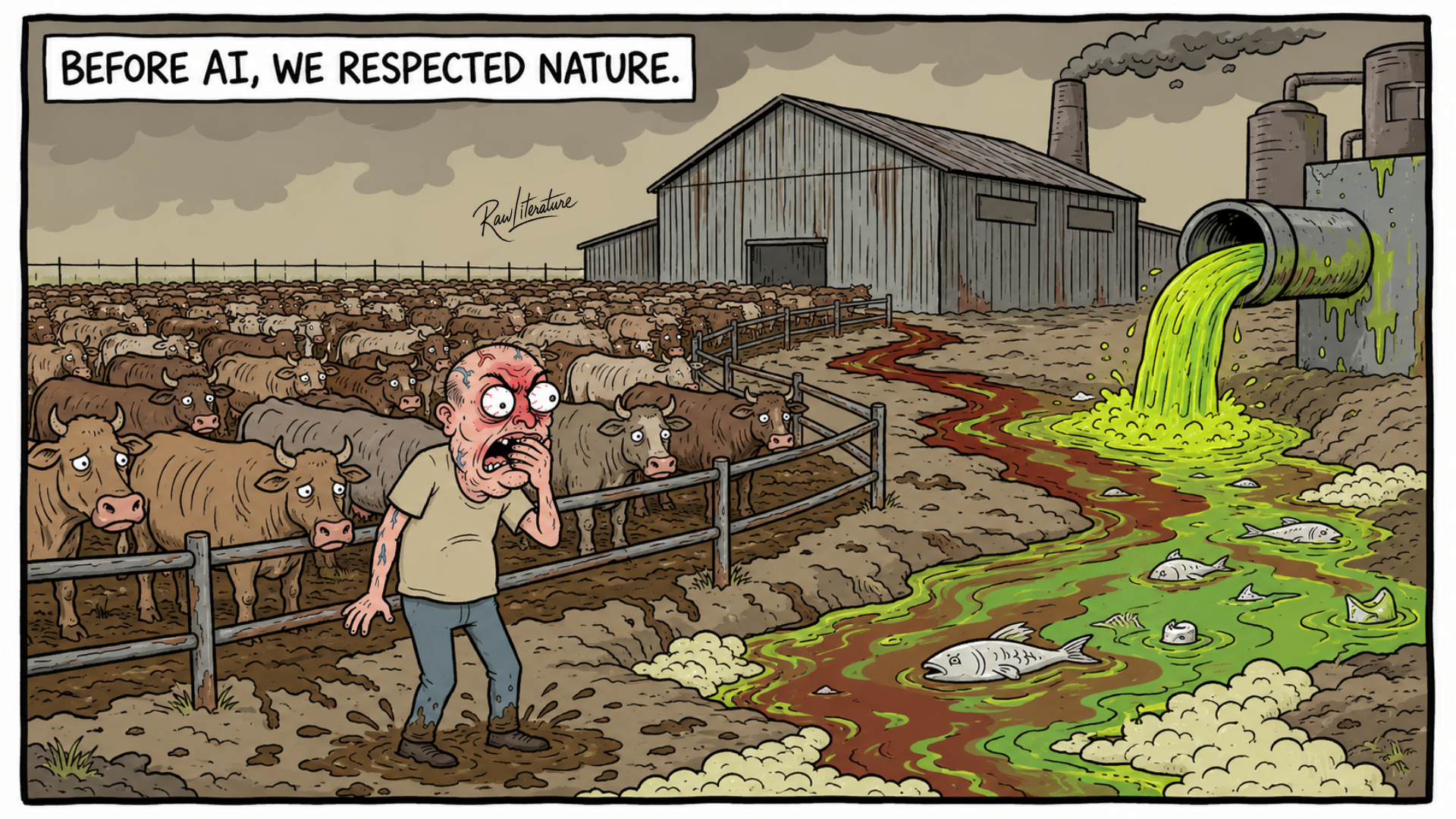
Since ancient times some madmen warned their civilization of the nefarious consequences of environmental shifts. Between 2100 and 1900 BC, farmers of Mesopotamia had to give up on wheat and barley. Salt was turning their crops white due to heavy irrigation. Then, the warning appeared in the oldest poem of all in which Gilgamesh went to a sacred forest to kill its guardian and cut the trees. Then, he gives Enkidu the line about having reduced the forest to a wasteland.
Every civilization since has been told the same warning. However, the levels of consumption of our resources increase at a gigantic pace, and we can’t or we aren’t willing to stop it. The environmental movement of the 1960s in Europe and the United States gathers voices altogether. They were asking the same thing as the Babylonians: to halt cutting trees and to halt altering the course of rivers. But they added other issues, overfishing, burning coal, and oil. The answer was staggering stubbornness, and those madmen and madwomen were a threat to society’s progress; they were marginalized and rejected on their paranoia. Just a few cared about their math, but the debate stopped by looks, gender, manners, and temperament rather than intelligence.
The 21st century arrived therefore with its alarms. The scientific community continues with the scratched CD, repeating again and again the apocalyptic consequence of our way to treat our limited resources. It’s not only the fish, coal and oil; it’s the fashion industry; it’s industrialized cattle, it’s the car plants, military and space programs; it's the warehouses and their toxic waste. And now, the hyper-accelerated race of the technology industry with their eager greed to find rare earth materials to build chips and the land to build data centers for the massive use of AI. The list grows bigger every decade and no one reads the notifications. Every time is the same demand: water, land and power.
In June 2026 the UN university released a report on the environmental impact of data centers. Once again we’re back to the Babylonians. It’s not just the water consumption that goes up to 448 terawatt-hours of electricity in 2025. If AI companies were a country, they’d be just behind France. Bloomberg found that about two-thirds of US data centers built or in development since 2022 sit in places already under high water stress, and Saudi Arabia and the United Emirates States are taking more of them than ever. Musk, Altman, Amodei and Pichai aren’t being ambushed by hydrology. Anthropic announced fifty billion dollars of new sites in Texas and New York and cited the Trump administration's AI Action Plan in the same announcement. Elon’s xAI ran as many as 35 unpermitted gas turbines in Memphis, pulled them when the NAACP threatened to sue, then installed 27 more across the state line in Mississippi and ran those without a permit too.
The forecast for 2030, which is also the year the Sustainable Development Goals (SDG) were supposed to be met and failed, is 945 terawatt-hours for global data centers. That’s the whole of Japan, every house and factory and train. The water that comes with it is 9.3 trillion liters, which the UN sets against the basic needs of 1.3 billion people, and the land is 14,500 square kilometers, about ten Mexico City. None of that counts the 2.5 billion prompts a day that ChatGPT alone is estimated to receive. The sites need ground, so we’re back at the start: cut, clear, divert, pave, then bolt on gas turbines to feed what has been built. Four thousand years, and the method is identical. Only the output has changed, and the reason. We’re doing it to make slop faster and to lengthen a list of men whose money in 2030 will buy them almost anything except somewhere else to spend it.
Want to explore more, visit Samsara News!