The Glories of Bantar Gebang
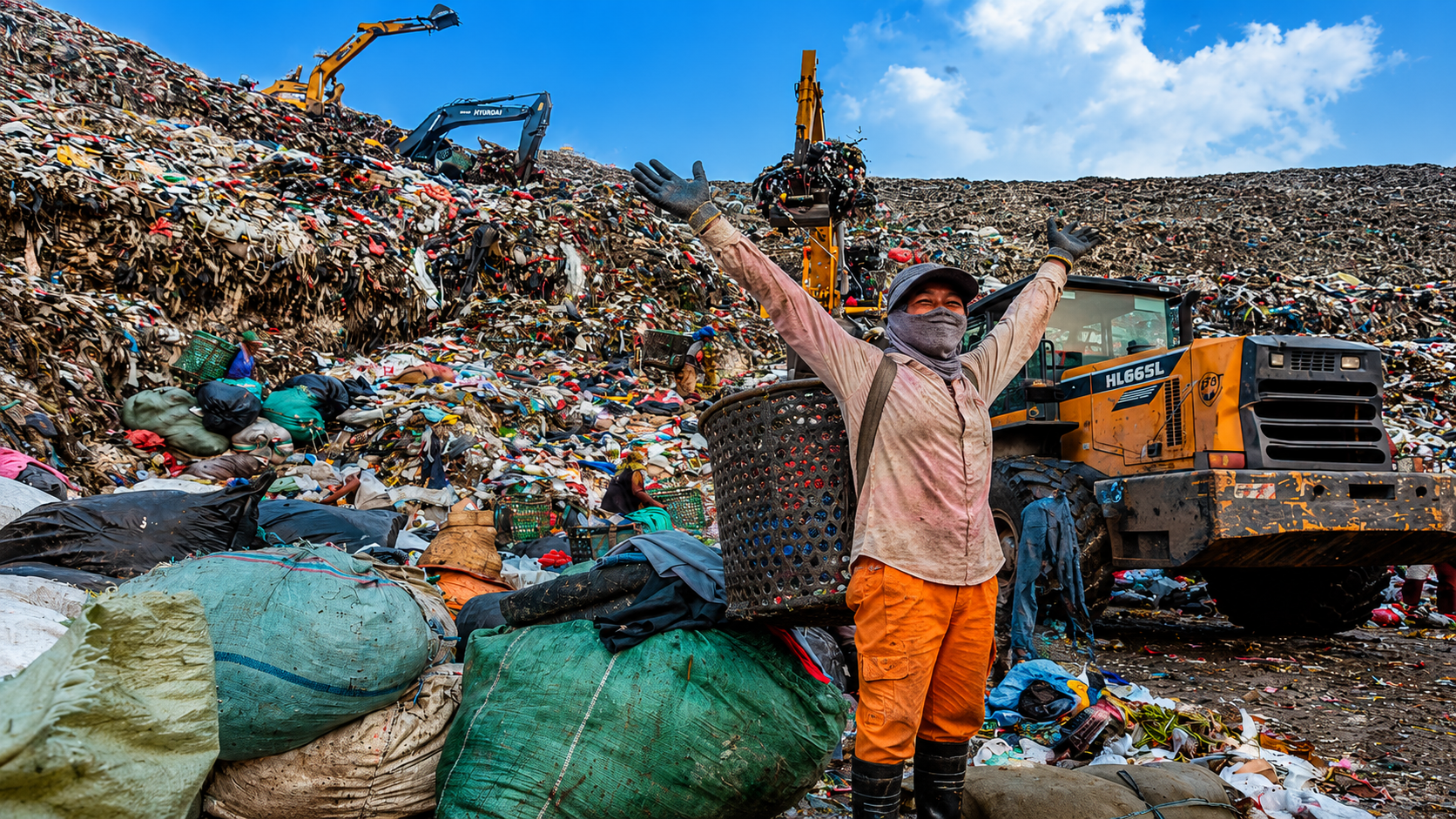
The global waste department has successfully manufactured the world's most glamorous profession: “trash picking.” In the legendary trash-mountains of Bantar Gebang, situated on the outskirts of Jakarta, Indonesia, thousands of forgotten citizens have discovered a highly romanticized, yet entirely deadly livelihood. Spanning over 110 hectares and groaning under 55 million tons of hyper-consumption, this monumental dumpsite stands as Asia's ultimate testament to unchecked plastic production.
Multinational plastic conglomerates should feel immensely proud of their endless cooperation in building these massive rubbish sanctuaries. Every single day, a relentless caravan of heavily loaded trash trucks journeys from Jakarta to dump over 7,500 tons of fresh garbage. Within these unstable, toxic peaks, over 6,000 informal waste pickers risk life and limb to harvest discarded plastics for the global market. While early optimistic tallies claimed they pocketed a breezy $8 to $16 a day, allegedly enough to send their children to school and escape this pungent ecosystem, peer-reviewed data from Habitat International paints a grim alternative. The real average individual income falls drastically below the legal minimum wage, further cannibalized by endless cycles of structural debt owed to informal waste bosses.
Yet, the local government has long treated this catastrophic open-dumping ground as a brilliant blueprint for regional waste management. Even after a devastating March 2026 garbage landslide killed seven people, forcing the Environment Ministry to publicly condemn the facility's unlawful status under the national 2008 Waste Management Law, the State’s response remains aggressively ambitious. Rather than enacting strict single-use plastic bags or subsidizing organic composting for sustainable agriculture, the administration has announced a desperate two-year deadline to clear Bantar Gebang using high-tech incineration.
Coordinating ministries are aggressively fast-tracking 34 multi-trillion-rupiah waste-to-energy projects nationwide. Independent watchdogs, such as the Institute for Ecological Observation and Wetland Conservations, have heavily criticized this paradigm, declaring incineration a “false solution” that fails to address source segregation and instead vaporizes corporate accountability. Ultimately, why bother implementing real environmental policy when you can simply rely on the bare hands of marginalized citizens to sort what can be upcycled? As the government attempts to relocate the crisis to fresh dumping deposits deep in the mountains, Indonesia continues to prove that the corporate dream is a perfect, perpetual cycle of plastic.
Want to explore more, visit Samsara News!