José Manuel Restrepo’s AI-Generated Academic Rigor
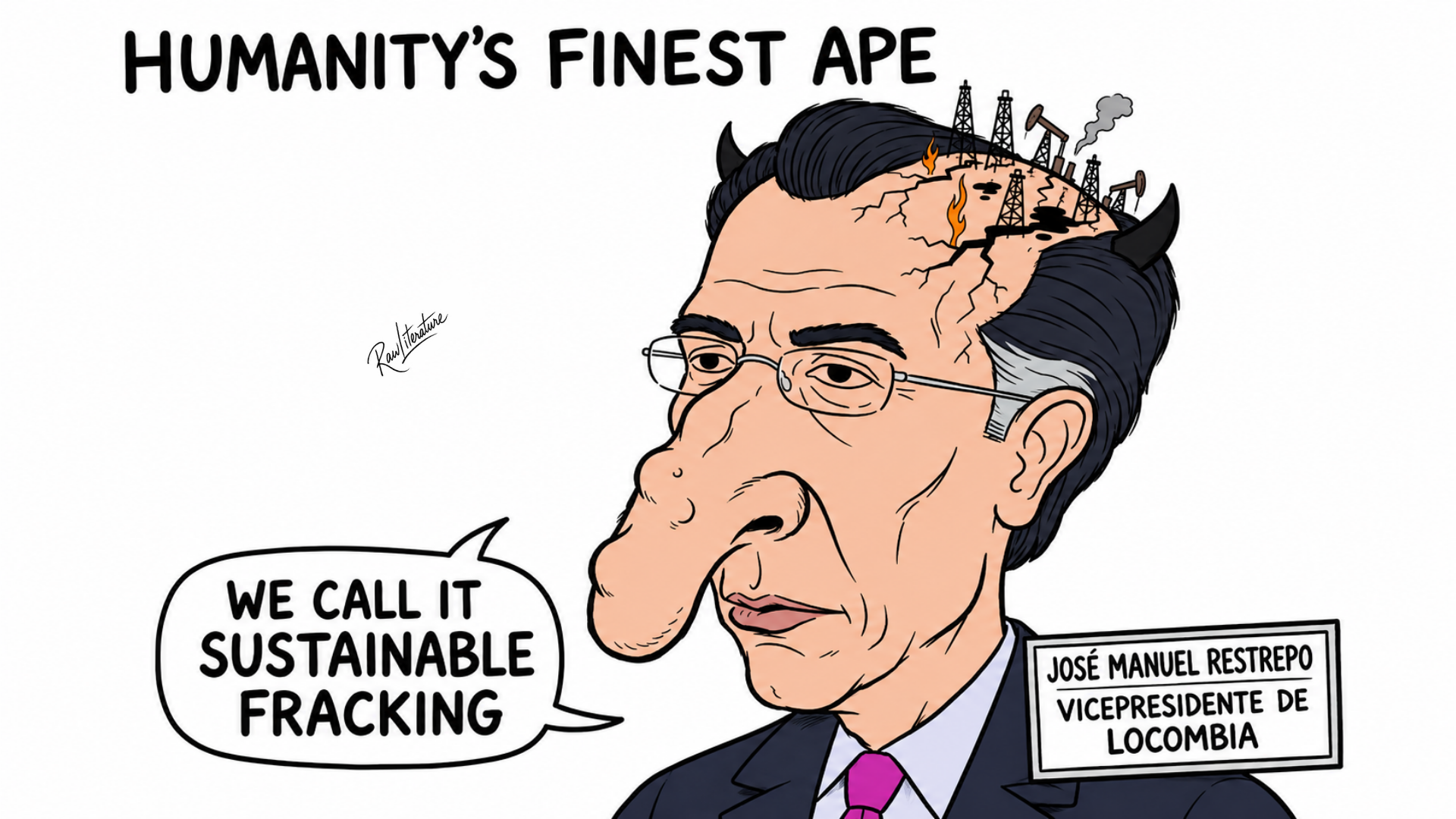
Behind the scenes of the theatrical show of Abelardo De La Espriella stands the supposed seriousness of reading glasses and the questionable academic sharpness of his vice-president, José Manuel Restrepo Abondano. It seems that the one who’s really governing the country is him. But when we unfold the academic authority and well-spoken words, a contradiction rises. Many academics, attracted by power, trade on their academic authority, collecting titles to demand worship rather than applying their scientific methodology and oath to public service.
Restrepo is an economist that has built his career in the administration of private universities in Colombia as his own businesses. He was Rector of the Rosario University, a cradle of conservative ideals, presidents, and many flawed politicians; then, he went to CESA, which is a highly privileged business school; finally, he stayed as Rector of the new EIA, another business school of the Chamber of Commerce of Bogota. Though there’re many controversies from his ways of handling the budget for every university, academics and professionals in the field criticized him for using those platforms as a bridge to political visibility when universities are meant to question the power and the status quo and cash payouts, prevailing contracts with companies unrelated to education.
He has a beginner’s career in politics. Under Ivan Duque’s disastrous presidency from 2018 to 2022, Finance Minister Alberto Carrasquilla tried to raise taxes on primary goods like chicken and eggs during the Covid-19 pandemic, sparking massive social protests. Restrepo took over the ministry at the same time he was running the Minister of Commerce. He passed a short-term “Social Solidarity Tax Reform” strictly to quiet the streets, a localized patch that experts note completely failed to cure the country’s systemic inequality.
Moving forward, the highly respected academic has become a promoter of “Sustainable Fracking.” High in Colombia’s rich mountains, he defended the practice alongside marine biologist Claudia Bessudo. However, his arguments were so weak and disconnected from ecological facts that his esteemed academic reputation was shattered instantly. Furthermore, marking the height of irony regarding his lofty academic presence within the government, a book of grievances was released: The Book of Truth.
Written with the assistance of an AI bot, the document lacks factual sources and references regarding alleged corruption cases during Gustavo Petro’s administration. Of the 82 cases cited from journalistic articles, only four were new. Evaluating wrongdoings from the previous government is a job for the judicial system, not an AI text generator powered by one of Colombia’s supposedly brilliant minds. The present looks dystopically fine for Colombians.
Want to explore more, visit Samsara News!