United Russia's Democratic Façade
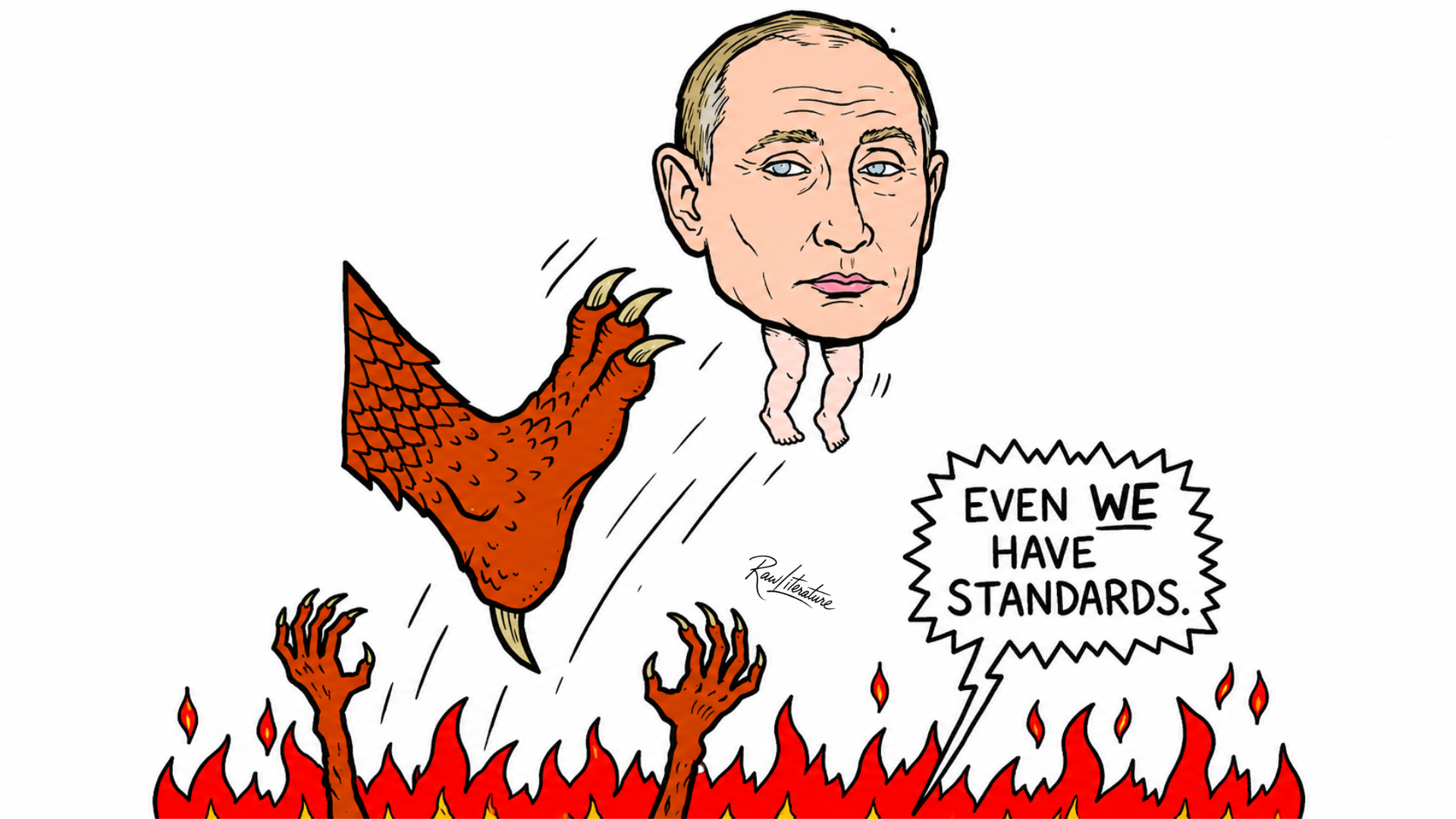
In September 2026, the Russian Federation will hold elections for the State Duma, a bureaucratic ritual designed to confirm the legislative results the Kremlin finalized months prior. United Russia, the ruling party created in 2001 to serve as the permanent rubber stamp for Vladimir Putin, currently holds 324 of the 450 available seats. The upcoming vote functions less as a contest of ideology than as an administrative audit of the regional governors' capacity to organize a predictable outcome. The political party operates as an adaptable vessel for the presidential administration's immediate policy requirements.
Those requirements have narrowed entirely to wartime mobilization. The party that once marketed itself on economic stability is executing a militarized overhaul of its personnel. The Kremlin is refreshing the Duma through the “Time of Heroes” initiative, an official pipeline launched by Putin in March 2024 to groom veterans of the Ukraine invasion for civil service. By placing active participants of the war into parliamentary seats, the government ensures the legislature is populated by individuals whose absolute loyalty has been tested on the front lines. The parliament is steadily transitioning from a civilian bureaucracy into an extension of the military command structure.
To secure this demographic transition smoothly across eleven time zones, the administration has refined its electoral mechanics. The reliance on physical ballot stuffing at local polling stations has been heavily augmented by Remote Electronic Voting in which even dead people vote, and moreover, invaded regions of Ukraine can do it as well. This digital infrastructure allows the State to tabulate election results with absolute precision and zero independent oversight. When Putin secured 87 percent of the vote in the March 2024 presidential election, a figure mathematically impossible in a competitive system, the digital network proved its autocratic efficiency. The 2026 legislative elections will deploy this centralized technology to guarantee United Russia maintains its supermajority, processing millions of votes in a closed server environment.
While the ruling party enjoys the convenience of guaranteed State-mandated victory, the genuine opposition engages with a fundamentally different State apparatus. Actual political rivals operate under the constant threat of the federal security services. Alexei Navalny’s grim trajectory from popular anti-corruption campaigner to a frozen casualty in an isolated Arctic penal colony established the modern baseline for political dissent. Rivals are permanently managed through a system of forced exile, lengthy, cold prison sentences on fabricated extremism charges, and mysterious lethal chemical interventions.
The September 2026 elections represent the bureaucratic perfection in a Big Brother style of this dual approach to governance. It’s a political system that combines the physical elimination tactics of the Soviet State with the optimized data management of the digital era. The Russian government has successfully decoupled the mechanical act of voting from the actual distribution of power, leaving a flawless democratic façade completely hollowed out from the very inside.
Want to explore more, visit Samsara News!