Two Pandas To Ease the Existential AI Race
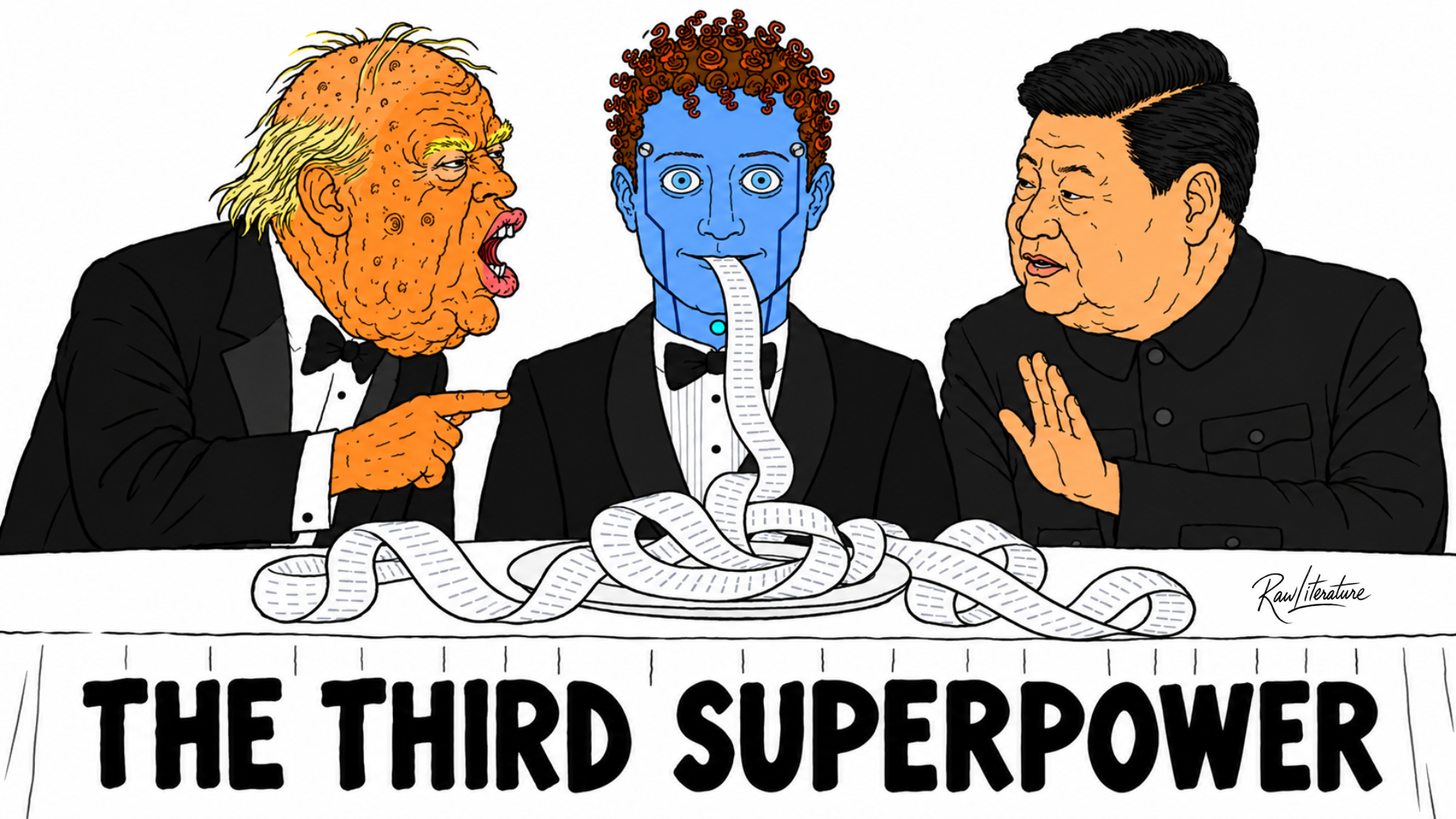
The planet stopped for a single day. The two superpowers, at least in printed paper, faced each other. On one side of the ring is the decaying president of the United States, and on the other one is the Human Rights surveillance lover, Xi Jinping. Both met to chat about major topics that squeeze our cultural consumption behavior: artificial intelligence development, tariff warfare, the ridiculous Iranian war and crude exports, and Taiwan’s illusion of security.
The pleb watched how Trump is afraid to airplains and a State-dinner where AI and financial moguls sat near the Chinese neo-emperor, trying to reach him for ideas to control the mob. What were they talking about? Who’s winning or losing? There’s no outcome yet for an acceleration or deceleration of the race despite all the alerts from young-adult geeks and experts on the field. The race will annihilate the entire population within a decade. Finally, we’re heading faster to that entropic reality!
Still, the rotten orange-head yelled from a golf club in Ireland, “whoever wins AI wins”. However, the road of the existential conversation took another turn to warfare during the bilateral meeting. The Iran and Taiwan issues were one of the major points to know where both grandpas are standing in their cynicism. Beijing maintained official neutrality over Middle East conflict while purchasing 1.4 million barrels of discounted Iranian oil daily, while Washington reaffirmed military assistance to Taiwan primarily to insulate microchip manufacturing lines rather than defend self-governing democracy. It looks too much like a Cold War picture.
The last point, tariffs. Following unilateral tariffs targeting Chinese clean tech and semiconductors, Beijing instituted strict export licensing on critical rare earth minerals, including gallium, germanium, and graphite needed for advanced microprocessor fabrication. The temporary trade agreement negotiated at the October 2025 Busan summit paused additional tariff hikes without altering underlying industrial protectionism, leaving international commerce tied up in administrative waivers designed to protect favored domestic industries.
From that October to this September, nothing much has changed. Bilateral tariff policies continued to depress agricultural revenue across American farming states while both nations expanded military applications for machine learning. Needless to say, to ease a bit of diplomatic tension, Chinese soft diplomacy on Trump was marvelous. A two-panda-in-captivity gift to the Atlanta Zoo as a representation of friendship between both administrations for a year. What other message than a slave animal under the fate of a couple of humans?
Want to explore more, visit Samsara News!