
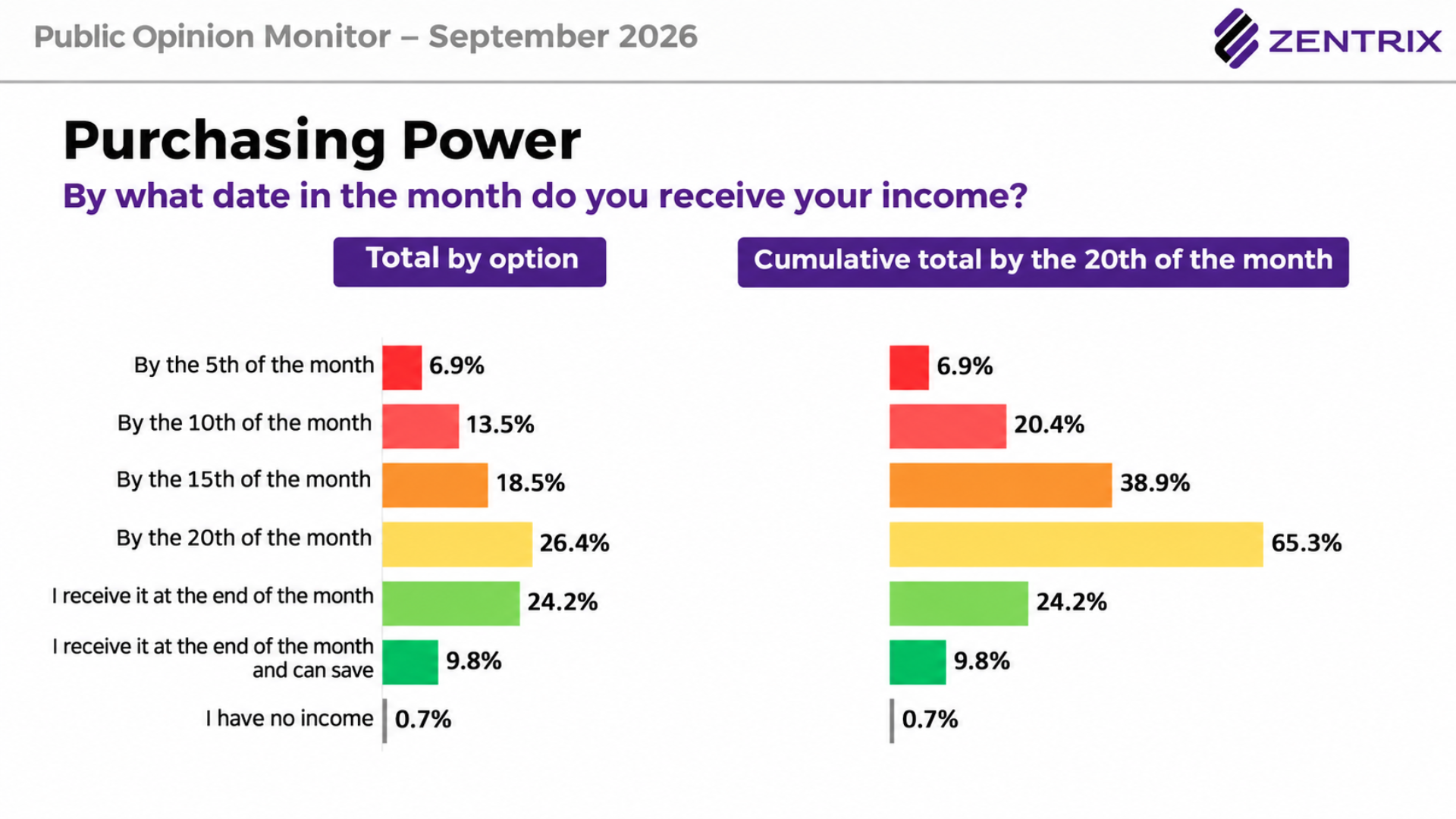
For 38.9% of Argentina’s lower class, the money runs out by the 15th, so they have to complete it with the lenders’ claws. The country’s population is highly in debt. Argentines are still waiting for Javier Milei’s promise on the dynamic wage. The labor reform, approved by the Senate this year, was supposed to increase the mortal pleb’s salaries and jobs. Well, the first results outraged Milei when the pollster Zentrix published them. Overall, the study showed that by the 20th of the month, 83.3% of the lower class are out of money. In the upper class, 65.3% reach the end of the month and save.
In October, the minimum wage is approximately 391,200 pesos ($256), and the average income is 1,094,136 pesos ($713) a month. Notwithstanding, almost half of the working population (45%) in the country doesn’t have a formal job. The official statistics count those informal salaries at $458 a month if the person is not sick and doesn’t have family obligations. The claim that two in three Argentines run out of money by the 20th, Milei said, is “idiocy the size of a house.” “If they really run out of money on the 20th,” he asked, “how do they live ten days without eating or drinking?” The survey had already answered him. They borrow! Of everyone who took on debt, 55.1% did it for food and health.
Two in three Zentrix respondents want the State to step in on household debt, and the measure they want most is regulation of credit terms, although Milei’s rhetoric is against it. He settled the matter in August: nobody went to the lenders “with a gun to their head.” That month, 12.81% of household loans were in arrears, a hair under July’s 20-year high. Perhaps the dynamism was never meant for wages. It was meant for debt. A well-known practice of the upper classes: 63.4% of borrowers bought durable goods or funded their own activity in order to avoid paying taxes.
The crisis is officially a matter of perception. In the second quarter, CISPOL, another pollster, did a survey about the job market leveraging the perception of 83,000 fewer formal jobs than a year earlier and 348,000 more informal ones. The dynamic wages don’t stretch to the asado before the football match or the Friday fernet after work. Fewer than one in ten, 9.8%, enjoy the freedom to save. The rest of the pleb juggle overtime paid in time off, another informal job, and debt for food, health, and bills.
In July, Milei warns in his Neuquén speech: “The motherfuckers that turned this country shit were taking us to Cuba with a stop in Venezuela." In Madrid, on October 21, he said Argentina is “the proof that fighting decline bears fruit” and that “decline is not a destiny, but a choice.” For two in three Argentines, decline is a date: the 20th.
Want to explore more, visit Samsara News!