Colombia’s Deadly Football Culture
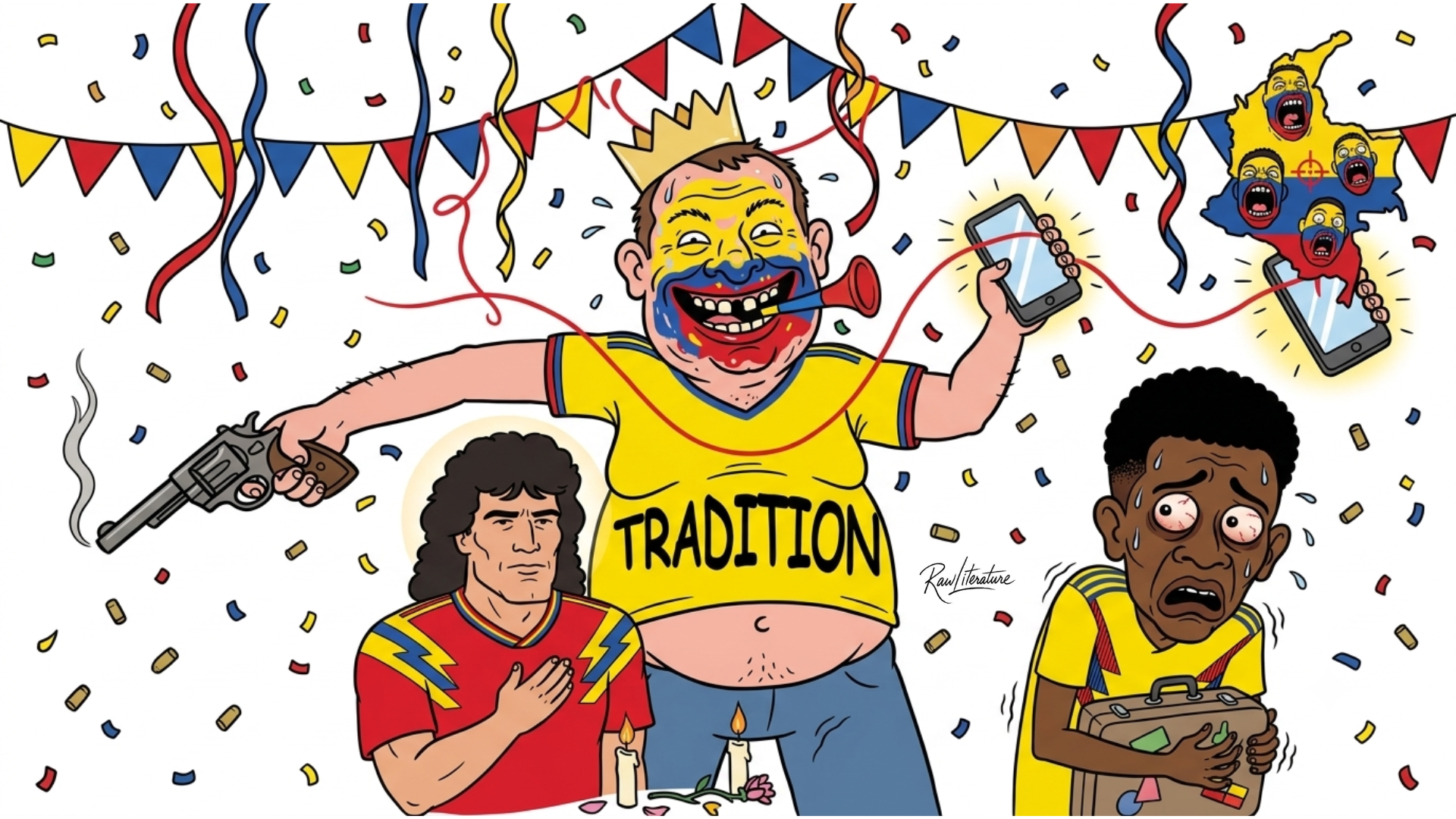
“Tell the Colombian football team that they’re the favorites, and they’ll immediately find a way to lose.” An Argentine football coach allegedly muttered this long ago, capturing the systemic vertigo of a nation burdened by expectation. Perhaps the adjective “favorite” is a bit extremist for a footballing nation that doesn’t know what it means to be a World Champion, an honor that simply is not coded into its cultural DNA and, let us be fiercely honest, perhaps never will be. However, what hasn’t changed a single inch over the decades is the terrifying, visceral violence of the society nesting within the sport. Football in this corner of the world is not merely a game; it’s a high-stakes psychological substitute for a State that has historically failed to guarantee basic survival.
Colombia once descended entirely into a dark age of sportsmanship turned sport-slaughter. Consider the tragic blueprint of an own goal scored by Andrés Escobar (the elegant, clean-tackling Colombian Paolo Maldini of the 1990s) during the 1994 World Cup hosted in the Dis-united States. The fateful match was against the host team, who scraped a 2-1 victory off the back of national misfortune. Every Colombian who watched that game remembers precisely where they were when the collective illusion shattered as well as their bets.
When the squad returned to their troubled motherland, the disgruntled supporters were far from happy to welcome them home. A few days passed under a tense, suffocating atmosphere until two mafia capos confronted the defender outside a nightclub in Medellin. Within moments, the gangsters' driver unleashed his weapon, pouring six systematic bullets into an innocent body that loved nothing more than cleanly kicking a ball. The dark myth whispers that the assassin shouted “Gol!” with every pull of the trigger, a grim testament to a society unable to decouple a sport's errors from financial cartel deficits.
Thirty-two years later, this horrific history is aggressively repeating itself in the digital colosseum. Same World Cup country, a different generation of scapegoats. In this 2026 tournament, the knockout match against Switzerland was always going to be a psychologically volatile fixture. The winner would earn the perilous honor of playing against the reigning world champions and FIFA’s favorite, Argentina. For Colombians, however, this match represented a warped sense of national pride that transcends standard sporting ambition; it represents a zero-sum game of life over death.
To understand this pathology, one must look at the blurred data of historical celebrations. The legendary 5-0 thrashing of Argentina in Buenos Aires prior to the 1994 World Cup gave the nation a brief glimpse of pure euphoria. Yet, that joy was inherently lethal. Sociological records confirm that at least 80 humans lost their lives that very night, not from grief, but from celebrating the victory through drunk driving, domestic brawls, and stray celebratory gunfire.
We’re now watching the same script play out across modern social media networks. With every match, local joy instantly mutates into a hectic, frantic violence. It’s a national fist party that inevitably concludes with a funeral directory. Thus, the recent loss to the Swiss went far beyond normal fan outrage. Once more, literal mortal threats arrived in the digital inboxes of the squad.
This time, the target is Jaminton Campaz, the electrifying midfielder who missed the crucial opportunity to secure a ticket to the quarter-finals against Argentina. The player cannot safely return to Colombia, nor can his family enjoy a single moment of peace. They’re trapped in the shadow of a country that has forgotten how to differentiate a missed winger's cross from high treason.
This is the tragic, recurring portrait of a nation that has simply never learned how to coexist in peace throughout its entire modern existence. Perhaps the ultimate, highly logical solution is simple: either Colombia must immediately withdraw from competing in any future World Cups of any team sport, or it must exclusively pivot its national funding to individual disciplines where victory is clinically isolated.
There’re a brilliant couple of options available, such as cycling, speed skating, BMX, or Olympic weightlifting. It looks like the only viable way out of this deadly cycle of celebration and grief. By deliberately shifting the national perspective to sports where individual athletes conquer the elements alone on the asphalt of the Andes, the collective society could finally grow a custom of peaceful appreciation. If there’s no team to betray the national ego, there’ll be absolutely no reason left to kill anyone else or oneself.
Want to explore more, visit Samsara News!