Brazil Elections: An 80-Year-Old vs. a One-Bill Senator
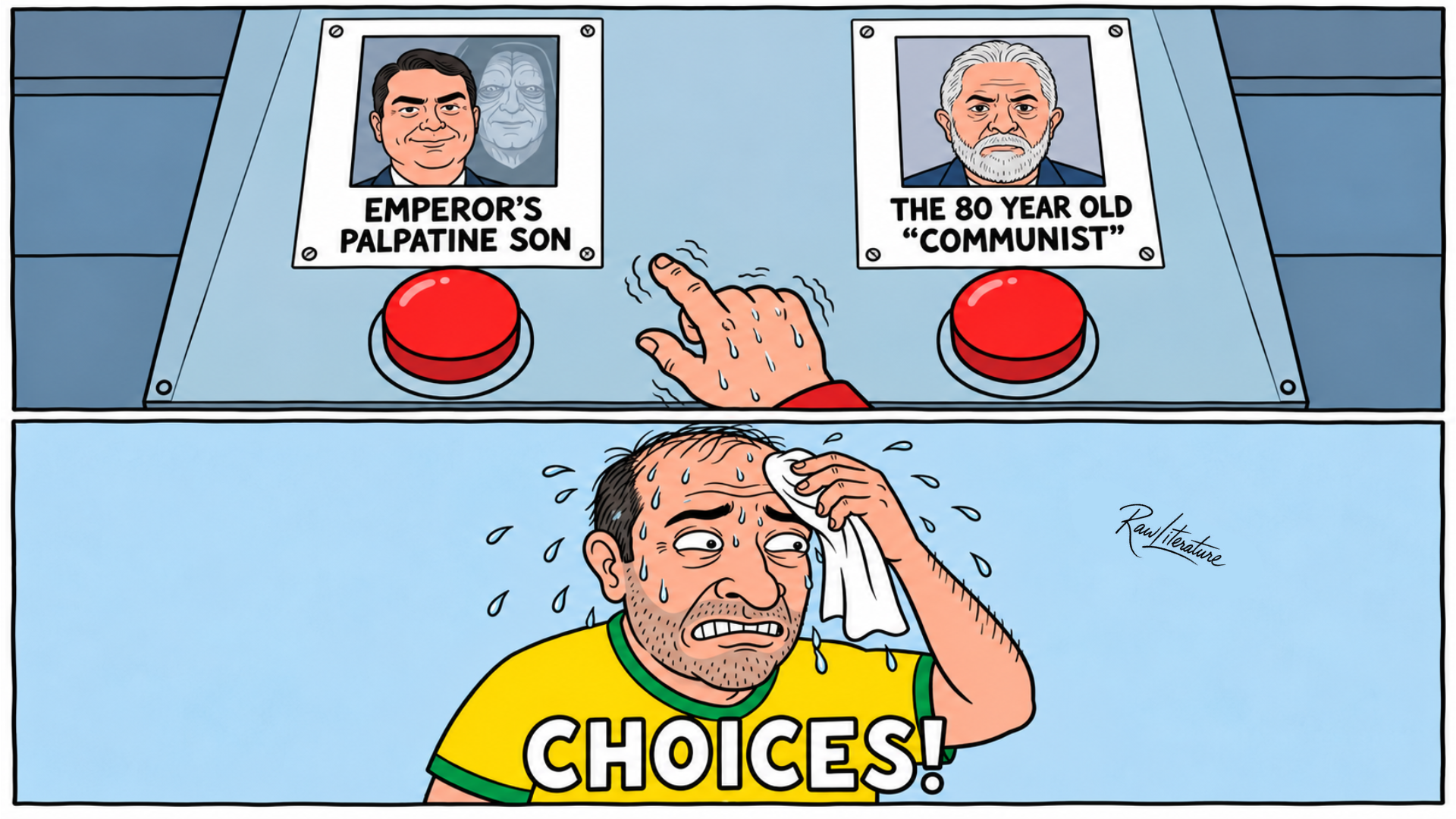
Last Sunday, Brazil held its first-round elections, announcing an initial winner in the anticipated race between Luiz Inácio Lula da Silva and Flávio Bolsonaro. The Bolsonaro clan has taken the lead. Flávio is the eldest son of Jair Bolsonaro, a man accused of masterminding a coup after losing the 2022 elections to Lula. A good role model for his son. On the contrary, Lula, now 80 years old, is currently seeking yet another mandate; power gives him the required stamina.
Brazil’s left-wing parties appear to have run out of fresh candidates to confront the Bolsonaro clan’s brand of populism, more like fascism-ish, which remains highly tethered to Evangelical churches and Trump supporters (the same that did the 6 January insurrection to the Capitol). Experts argue that Lula played it entirely too safe during the campaign, relying heavily on economic indicators (which everyone inflates for the good notes) while the mob worries about debt, the cost of living, and increasing insecurity. Plagued by the sheer stubbornness of age, Lula now has to contend with the inescapable label of being the “Brazilian Biden”. It must be deeply frustrating to film oneself working out, only to still be compared to the man who let Trump back into the White House.
The path appears clear for the Brazilian populist right-wing. Despite carrying the heavy weight of corruption cases, including the bizarre scandal surrounding his father’s propagandistic biopic, Dark Horse, Bolsonaro Jr. has a genuine mathematical chance of winning the presidency. However, a picture of him in duty could be seen as the one during his tenure as a senator. He pursued a narrow legacy centered heavily on religion, gun ownership, and traditional family values. Over seven years, exactly one bill passed under his name over fifty-seven: PL 3.190/2023, which amends the National Program for Oriented Productive Microcredit. Thus, there’s not much to expect of hard work, but propaganda like his father's.
It was Jair Bolsonaro who ultimately gave his blessing for Flávio to run for the presidency. In a transactional response, Flávio explicitly promised to grant pardons to his father and the January 8 rioters. The rest of the campaign’s rhetoric remains unchanged: expand gun access, increase police intervention, promote Bukele-style mass incarcerations, lower the age of criminal responsibility, and dismantle the welfare state that Lula has expanded in recent years. Flávio positions himself as the defender of traditional Brazilian culture to attract the voters from Evangelical groups.
The second run-off is scheduled for October 25. It’s far too late for Lula to step down from the race and hand the ship over to a candidate with a higher life expectancy. However, the looming corruption cases that Flávio Bolsonaro faces could still inflict critical harm on his campaign. Leaked videos of him bragging about his Bolsonaro’s corrupted blood reveal a populist running strictly for pockets and power, rather than any coherent ideals or programs.
Brazil continues to suffer from high crime rates involving favela gangs, grinding economic inequality, and entrenched corruption. The triumphant return of the Bolsonaro clan (with both his mother and youngest brother gaining Senate seats) doesn’t present a solution to any of these problems; instead, it threatens to exacerbate them alongside the Amazon rainforest’s environmental crisis. On the other hand, Lula’s continuity is neither a guaranteed path to social prosperity nor is his advanced age a guarantee of basic stability. Between the two, who do you choose? As the local saying goes, “que o diabo entra e escolhe” (let the devil come in and choose).
Want to explore more, visit Samsara News!