Meta’s Experience on Political Interference
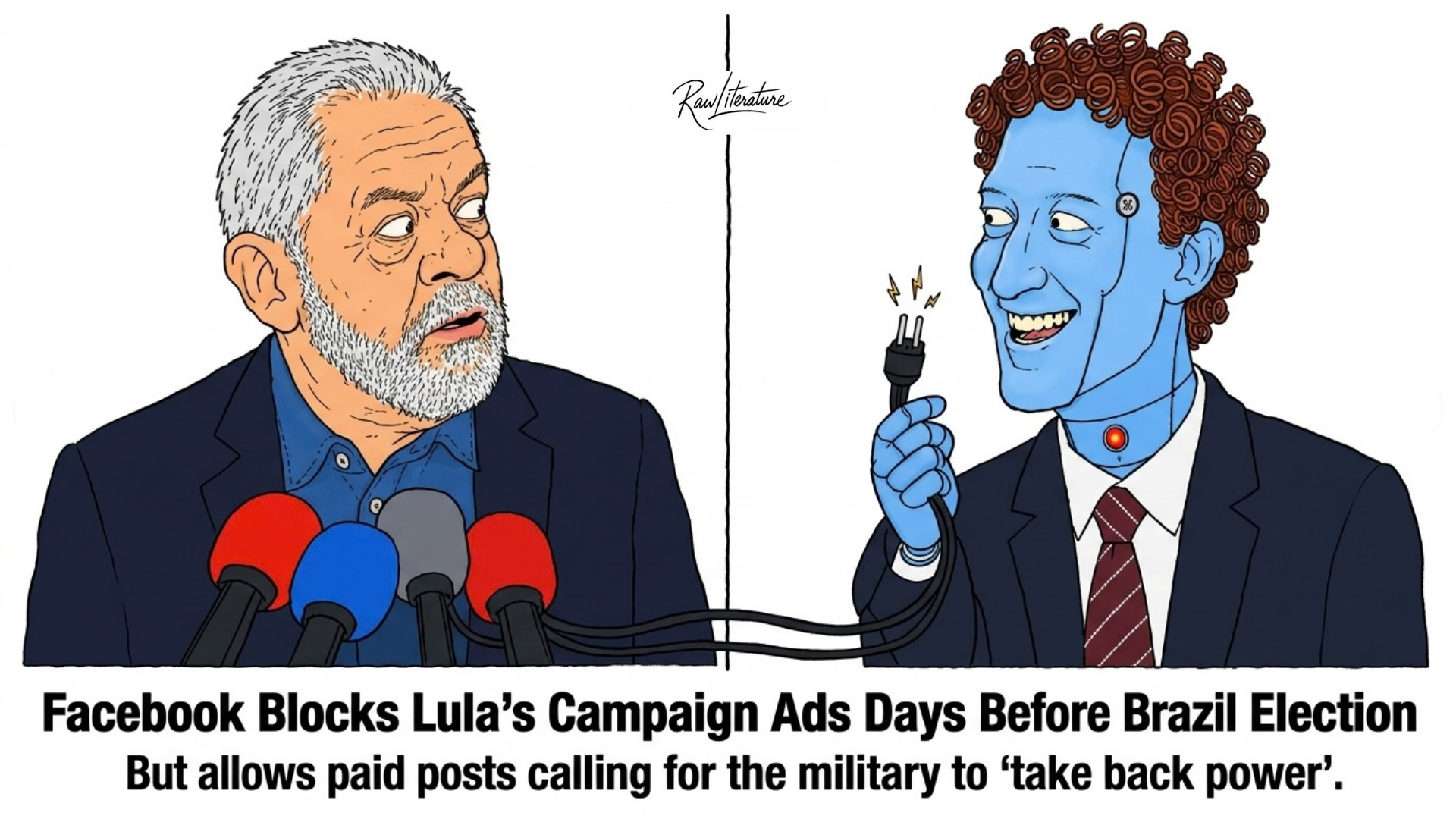
“We have a responsibility to protect your data, and if we can't then we don't deserve to serve you,” Mark Zuckerberg declared in March 2018, in front of Congress after his major backlash on the Cambridge Analytica case. His invention, Facebook, handled 87 million subscribers to the company for a psychological analysis on vote intentions across the United States’ 2016 presidential campaign and the United Kingdom’s Brexit referendum. In 2022, he had to pay $725 million over privacy violations and deceptive practices related to the breach. However, Zuckerberg and his companies didn’t stop here.
Let me unravel the story without a chronological sequence. On September 28, the presidential campaign team of Ignasio Lula da Silva accused Meta of disabling their account and campaign ads were blocked. There’s no argument from the company on why it decided to do so. While Meta ignored the story, Amnesty International, an NGO that works as a Human Rights watchdog did a test on campaign ads of Brazil’s elections. From fifteen tests, only eight approved. The irony is that the latter contained election misinformation! Just for the record, Facebook has an election “war room” that works 20 hours a day and in election time, 24 hours! They oversee elections worldwide, and their task is to stop falsehood campaigns! It sounds like a joke, right?
This “war room” or Election Operations Center (EOC) is run by a director of elections and civic engagement, a common name in NGOs and public institutions. It was created in 2018 after the shameless case of Cambridge Analytica. At present, Chief Information Security Officer Guy Rosen oversees safety and integrity. Former British Deputy Prime Minister Nick Clegg serves as President of Global Affairs, backed by former Republican political strategist Joel Kaplan as Vice President of Global Public Policy. Chief Product Officer Chris Cox weaves content distribution rules across WhatsApp, Instagram, and Facebook.
After seeing the architecture of the nonprofit disguise of Meta. Let’s continue with unraveling this circus that pretends to protect our free data. Meta's election integrity infrastructure doesn’t exist to protect democracy or safeguard voter information. It exists to absorb negative news coverage, reassure corporate advertisers, and shield Mark Zuckerberg from federal regulation. He monetizes political volatility, collects user engagement revenue, and leaves sovereign democratic nations to manage the domestic fallout.
From 2015 to 2020, a United Nations investigation concluded that Facebook was used to spread hate speech and military propaganda during the Rohingya genocide in Myanmar. The government accused the community of being illegal immigrants in the country. To leverage the irony and cynicism of the story, the Nobel Prize Laureate Aung San Suu Kyi defended Myanmar’s military junta at the International Criminal Court. The argument has a spice of shame, citing that the Rohingya were the ones who started the “internal conflict” by attacking official facilities. Zuckerberg’s magical, peace-building solution in another Congress appearance was to “hire dozens of more Burmese-language content reviewers”.
In parallel, from 2016 to 2022, time for the Philippine elections, fake accounts were created on Facebook to spread misinformation and discredit journalists, manipulate public opinion and influence candidacies, most likely to favor the autocrat Rodrigo Duterte (currently in prison in The Hague as the first president to face charges at the International Criminal Court). Meta permitted state-aligned troll networks to dominate the national information ecosystem without interference. In Manila as in Yangon, viral hatred paid dependable advertising dividends directly to Meta's corporate balance sheet.
Furthermore, during the 2020 U.S. election campaign, Facebook shut down its watchdogs and false claims of rigged elections started to flood the internet. We recall the infamous January 6 dumb insurrection. Part of the organization of the mob that broke through the Capitol as a medieval siege was taken in Facebook patriotic groups. In 2025, again in front of Congress, Zuckerberg gave another classic excuse, “it'll take time to get this right, and these are complex systems. They're never going to be perfect”.
How is it possible that a company that injects billions of dollars into its systems and CEO’s whims can’t truly do its work to tackle disinformation and misinformation and stop interfering in domestic and international elections?
It’s been ten years since Cambridge Analytica. Yet, we’ve been seeing the same floppy pattern regarding data and civic protection. But, the reality is other than that, Zuckerberg doesn’t care; he builds subterranean bunkers in Hawaii while ignoring real-world violence generated by his platforms. He sees only zeros behind our email and narcissist posts and opinions. We feed him with our relentless work on attention and he, behind the screen, laughs at us. Every election Meta corrupts is a calculated business decision and this guy must be held accountable for it.
Want to explore more, visit Samsara News!