The Persian Baba: Open and Shut Hormuz
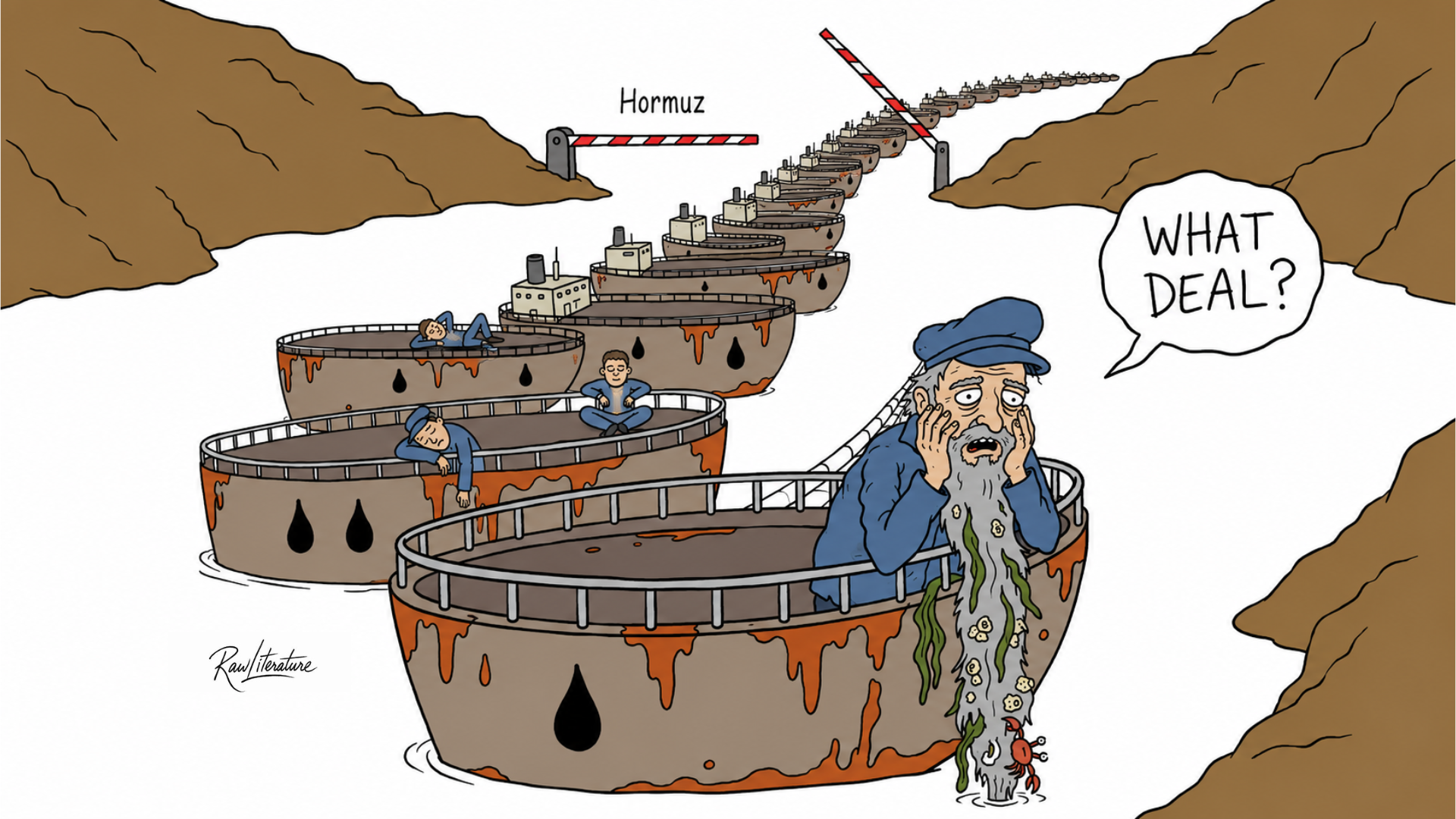
Once upon a time, before the azure waves burned with geopolitical spite, commercial ships crossed the historical waters of the Persian Gulf with absolute freedom. They glided smoothly from port to port, weaving a wealthy tapestry of trade from the rugged coastlines of Oman to the busy docks of Iran and the sandy reaches of Bahrain.
These massive vessels carried the industrial lifeblood of the modern world, crude oil and liquefied natural gas, exporting immense energy out of both Arab nations and Persian lands. In this nostalgic era, nothing had to be paid; no arbitrary tolls or extortionate taxes were levied just to cross these strategic waters toward the vast Indian Ocean and the world. It was an idyllic epoch of unhindered free trade and maritime navigation, a capitalist dream that endured right until prideful nations decided to start the ruinous engines of war.
Then came the reckoning. The Persian Baba, guarding his liquid domain, closed the Strait of Hormuz, forcing international ships to forfeit their pride in exchange for a desperately sought open gate. Seeking a brief respite from the chaos, the Persian Baba eventually signed a deeply misunderstood parchment with his bitter enemies, an accord intended to keep the rivers of trade flowing smoothly throughout the Gulf.
Under this fragile peace, a bureaucratic nightmare emerged: every single ship now had to submissively ask the Persian Baba for explicit authorization just to enter and leave the regional ports. However, the illusion of stability shattered when the enemies’ arrogant delegation unilaterally overturned the agreement, fueling continuous attacks and crippling economic sanctions across the region. The Persian Baba, cynical by nature, always suspected that his Western and regional enemies weren’t serious enough to keep their word as it was originally pacted.
Driven by existential spite, the Persian Baba determined to definitively close the Strait of Hormuz to save himself from economic strangulation. He packed his bags and personally went to the strategic naval hub of Bandar Abbas to control the passage of international vessels with his own eyes. He vowed he’d ruthlessly strike anyone who dared to cross the forbidden, imaginary maritime lines he drew in the water; subsequently, terrified ships could be left rotting at the dock or anchored helplessly for weeks, even months. With a grim smirk, he foresaw a devastating global economic crisis descending upon his enemies, those arrogant actors who stubbornly refused to respect basic navigation protocols.
Predictably, hubris won the day. Some reckless ships deliberately disobeyed the warnings as their stubborn commandants forced them to pass the dangerous lines. As soon as they sailed past the threshold, the Persian Baba opened fire upon them without hesitation, heavily damaging the vessels and severely endangering the lives of the crew. Bloodied and humbled, the enemies felt obliged to retreat once again from the Gulf, forced back to the table to negotiate another desperate parchment with the Persian.
In this new, iron-clad document, the Persian firmly stated that every vessel must present a magic password to unlock the Gulf’s heavily guarded gates: “Open Hormuz”. Friendly, compliant ships quickly started to announce the password, while defiant enemies pridefully refused to bend the knee. Yet, the stubborn adversaries could only watch in envy as they saw every cooperative ship bowing politely, chanting “Open Hormuz,” and watching the maritime gates unlock right away.
In moments of desperation, some stealthy boats tried to sneak in while the gates weren’t fully closed; however, the Persian Baba had his eyes wide open, and a vast network of local informants told him about every single movement in the Strait. Instantly, the coastal guards would exclaim, “Shut Hormuz!”, and whatever unfortunate vessel was trapped inside would be completely blocked until further due.
The dark strategy of the Hormuz gates was perfectly clear: subjugate the enemy by mercilessly crushing the world’s economy, even if the Persian Baba had to suffer immense economic pain on his own. He knows all too well that a conventional military confrontation is not worthy; his military capacities are severely limited, but the narrow Strait of Hormuz serves as the ultimate asymmetric leverage against his own systemic limitations. It could go on like this for an agonizingly long time, until the enemy finally realizes its own catastrophic mistake in daring to face the sharp Persian lion claws that decide who lives or dies, all while watching its enemies bark from afar like weak, toothless puppies.
For more satirical news, visit Samsara News!