Why Animal Farm Remains a Powerful Satire
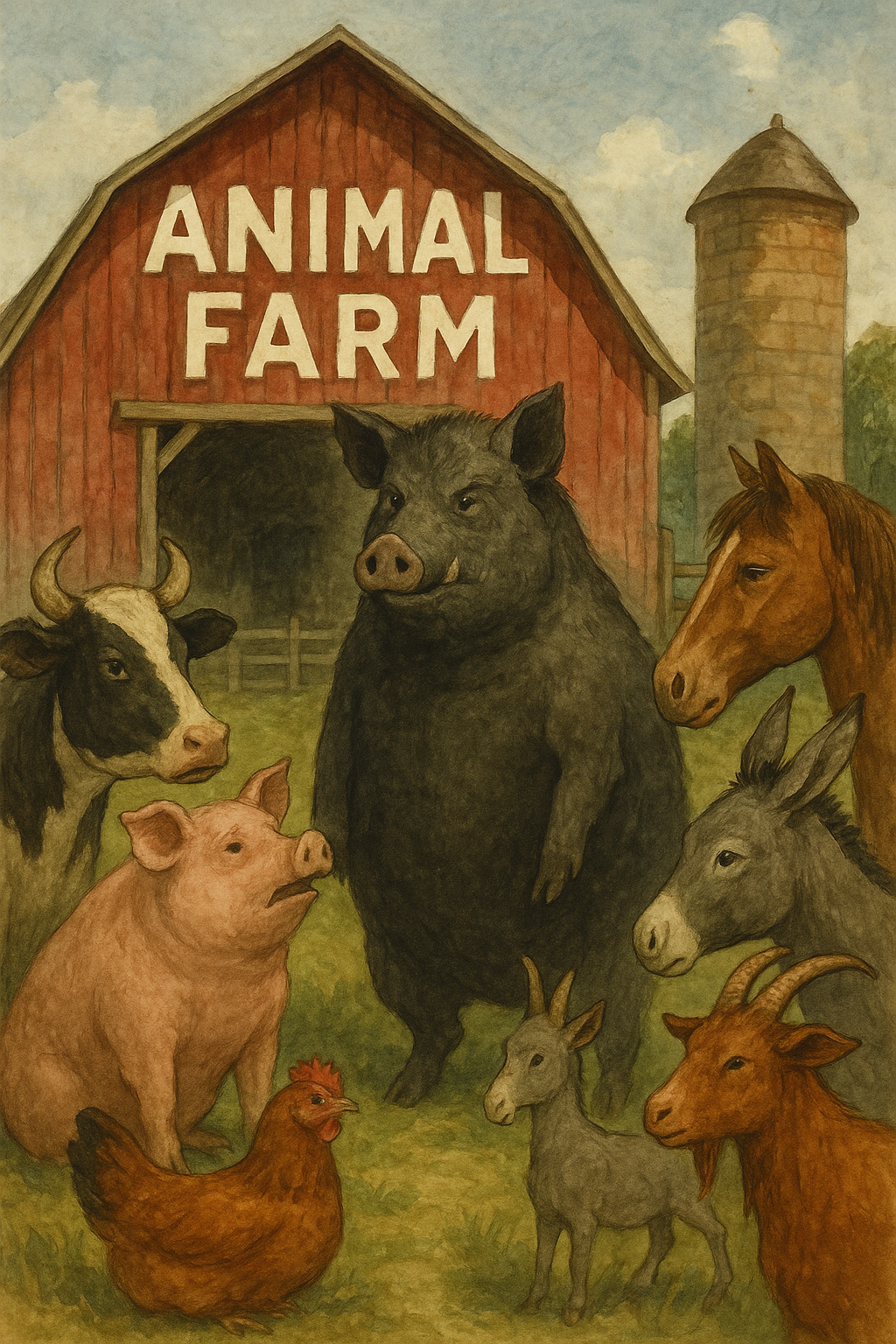
At first glance, Animal Farm looks almost harmless. A short book. Talking animals. Simple language. The kind of story people often encounter early, before they are told what it is supposed to mean.
That simplicity is precisely what makes it unsettling.
George Orwell’s Animal Farm endures not because it explains politics, but because it exposes how easily ideals decay — and how quietly people adapt when they do.
Satire as a Weapon
Satire is not meant to comfort. It uses humor, irony, and exaggeration to reveal truths that are often easier to ignore when presented directly. Beneath its surface, satire is sharp, sometimes cruel, because it mirrors reality in a distorted way — just enough to make recognition unavoidable.
In Animal Farm, Orwell strips politics of its grand language and ideological masks. What remains is power in its raw form: who controls resources, who controls language, and who controls memory.
A Fable That Refuses to Stay Innocent
The premise is deceptively simple. Animals overthrow their human owner in the hope of creating a fairer system, one built on equality and shared labor. For a moment, the dream feels possible.
Then it begins to rot.
Not through sudden violence, but through small shifts: rules rewritten, words redefined, history adjusted. The pigs don’t seize power overnight — they normalize it.
By the time the other animals realize what has happened, resistance no longer feels imaginable.
Why the Satire Still Cuts
Animal Farm is often read as a direct allegory of the Russian Revolution, and that reading is valid. But the novel survives because it extends far beyond its historical moment.
The real target is not a specific regime, but a recurring human pattern:
how revolutions repeat the structures they claim to destroy
how language becomes a tool of domination
how fear and comfort silence dissent
how inequality is justified once it becomes familiar
The most chilling moment is not when the pigs become tyrants — it is when the other animals stop questioning them.
The Violence of Language
One of Orwell’s sharpest satirical moves is linguistic. The commandments change. Slogans replace thought. Complexity is reduced to repetition.
“All animals are equal, but some animals are more equal than others.”
The sentence is absurd — and yet it works. That is the danger Orwell points to: when language loses meaning, power no longer needs logic.
Why It Still Matters
What makes Animal Farm powerful today is not its historical accuracy, but its psychological truth. Readers continue to recognize workplaces, governments, movements, and even themselves in its pages.
The novel doesn’t ask, Who is Napoleon?
It asks, How easily do we stop looking?
Note
Animal Farm is a reminder that satire does not need complexity to be devastating. Orwell’s strength lies in restraint. He trusts the reader to connect the dots — and that trust makes the message linger.
If you want to write satire, don’t explain too much. Choose a simple frame. Let power reveal itself slowly. Let the reader feel complicit before they feel warned.
That is how satire survives time.
Looking to go further in your writing journey? Explore our full collection of writer tips, or browse our website to see these ideas come to life.
We also welcome new voices — if you’d like to share your work, submit your writing and join the Raw Literature community.