To Read in the 21st Century Is an Act of Resistance
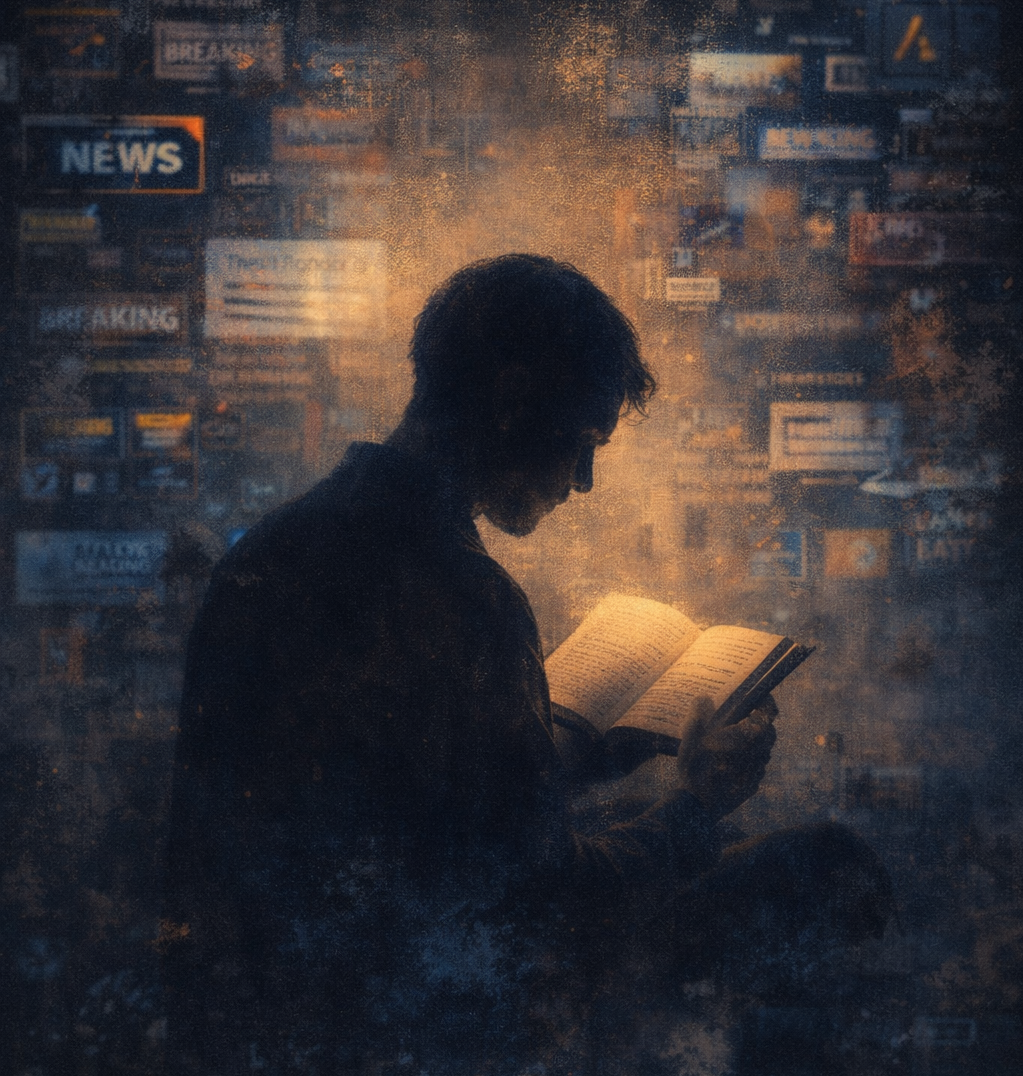
Reading has never been easier — and never been harder.
We live surrounded by words, yet starved of meaning. Screens flood us with headlines, opinions, summaries, recommendations, and algorithms that decide what deserves our attention before we ever choose for ourselves. In the 21st century, the problem is not what we cannot access, but what we cannot escape.
To read today is not a neutral activity. It is a decision made against speed, distraction, and endless noise.
The Illusion of Infinite Choice
We are told we have more access than ever before. Millions of books. Infinite articles. Entire libraries in our pockets.
But abundance does not equal freedom.
When everything is available, nothing demands commitment. Reading becomes fragmented — half a page here, a paragraph there, a constant sense of moving on before anything has the chance to settle.
The danger is not bad books.
The danger is reading that leaves no trace
The Disappearance of Attention
Modern culture does not reward depth. It rewards immediacy, certainty, and reaction. Reading slowly, carefully, without rushing toward a conclusion, has become almost subversive.
We skim. We scroll. We forget.
And gradually, we lose the ability to stay with difficulty — with ambiguity, contradiction, or discomfort. The kind of writing that resists easy interpretation becomes exhausting rather than inviting.
This is not accidental. A distracted reader is easier to guide, easier to satisfy, easier to replace.
What We Stop Reading Without Noticing
In the 21st century, we rarely ban books. We simply stop giving them time.
We stop reading:
texts that refuse to summarize themselves
voices that challenge our assumptions
language that demands patience
works that do not immediately entertain
Instead, we gravitate toward writing that confirms what we already believe, that moves quickly, that asks little of us.
Not because it is better — but because it is easier.
Reading as Exposure, Not Comfort
Real reading is not about agreement. It is about exposure.
To read well is to allow oneself to be unsettled, to encounter ideas that do not align neatly with identity or opinion. It requires a willingness to sit with uncertainty — to resist the urge to judge, share, or discard too quickly.
The most important texts are often the ones that resist instant understanding.
For Writers: The Reader Is Not Asleep, Just Tired
If readers seem impatient today, it is not because they are incapable of depth. It is because they are exhausted.
Writing that matters does not compete for attention by shouting louder — it earns it by refusing shortcuts. It trusts the reader enough to slow down, to struggle, to stay.
The future of literature does not belong to what is most visible, but to what survives rereading.
Why Reading Still Matters
To read in the 21st century is to protect something fragile: the ability to think without interruption, to feel without performance, to engage without spectacle.
It is an act of resistance against reduction — against language emptied of meaning, against ideas flattened into slogans.
Reading well is not about consuming more.
It is about choosing what is worth staying with.
And staying.
Looking to go further in your writing journey? Explore our full collection of writer tips, or browse our website to see these ideas come to life.
We also welcome new voices — if you’d like to share your work, submit your writing and join the Raw Literature community.