From Camels to Chainsaws: The Modern Soft Power
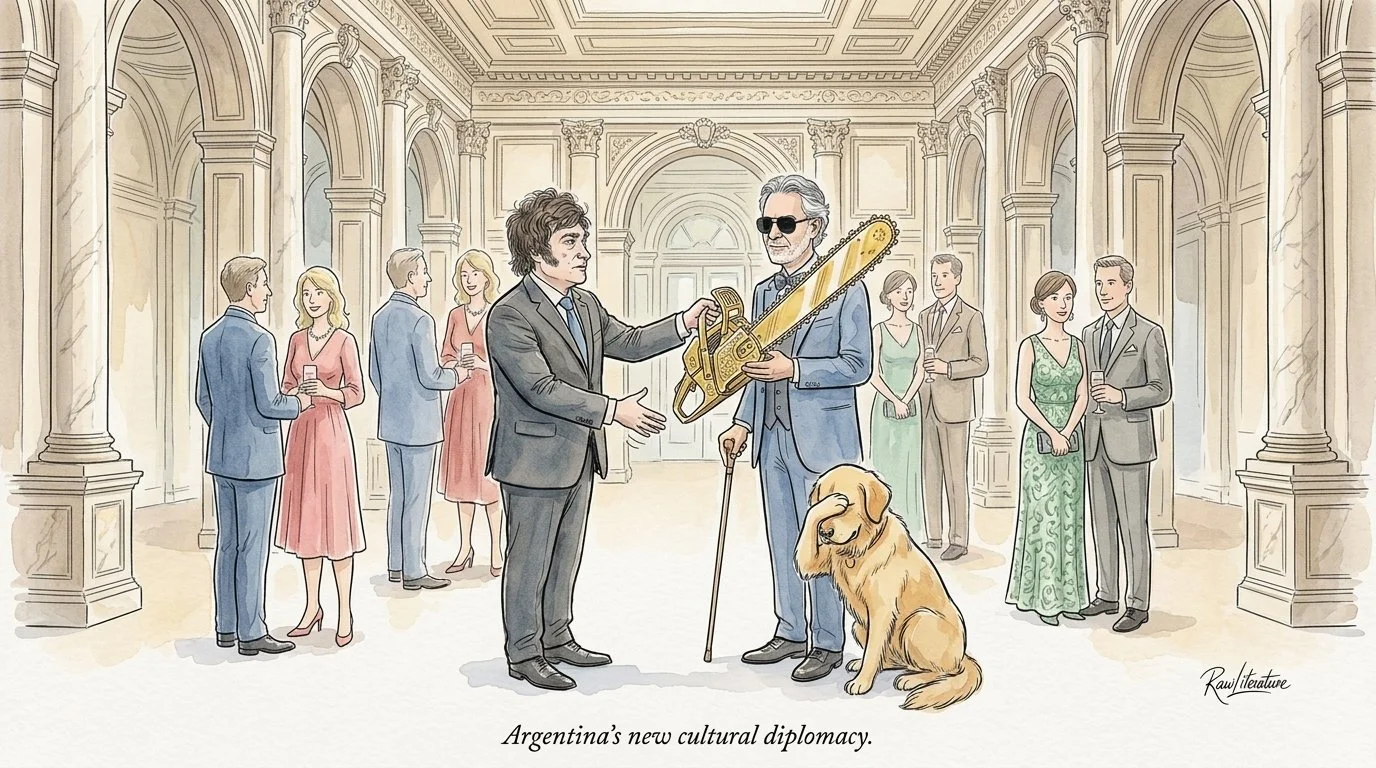
Cultural diplomacy is an essential matter for international relations and interculturality (when random people meet and share their cultural identities). Throughout the years, every minister of foreign affairs or head of state from every country, despite their political regime, has addressed gifts that represent their own culture to their counterpart or public figures. While intended as gestures of goodwill, these items often appear awkward when stripped of their cultural context. Don't worry, here you'll have a few examples so you can grasp this particular aspect of our world's “soft power".
Starting with one of the best-known diplomatic gifts, we have the beautiful table that Queen Victoria gave to US President Rutherford B. Hayes in 1880. It's called the Resolute Desk, which you can find in the Oval Office of the White House. The table is a handmade craft of timber from a British ship. So there you go: a cultural artifact, very useful and a reminder of bilateral relations between the Empire and the colonized land (very clever of the Brits).
Moving forward, diplomatic exchanges got a bit weird, like the black Labrador (a big dog) Putin brought as a gift to German Chancellor Angela Merkel in 2007. The Russian pseudo-dictator knew about Ms. Merkel's dog phobia, so he kindly decided to intimidate her. Not much soft power there, though. Or the camel that Malian diplomacy gave to French president François Hollande in 2013. Unfortunately, Mr. Hollande couldn't take it with him on the plane, so he decided to leave it with a local family. In the end, hunger arrived, and the camel... ended up on their plates, but not as another tablemate. The Malian had to buy another camel and send it to France.
Anyway, examples like the above can be found anywhere, with all kinds of stuff or animals thought of as gifts or cultural visits without their natural context. It could fill an entire encyclopedia. Nevertheless, the reason for this article is to arrive at 2025. This year we've seen a lot, from the luxurious, unconstitutional plane that the Qatar royal family gave to Donald “Toddler" Trump in May, to the presidential visit of Andrea Bocelli in Argentina, where President Milei showed him the famous gilded chainsaw.
The chainsaw is an awful instrument we use to cut down trees or their branches. However, Mr. Milei uses it as a symbol of liberal anarchism, a disguise for far-right ideology that is slightly chaotic and narrow-minded. Thus, the machine has nothing to do with Argentinian tango or literature, not even with their almighty football or rock music, not even with their wine or beloved meat.
The visit from Andrea Bocelli to the country of Mafalda illustrates the glamorous behavior of the populist Milei when he’s surrounded by popular people (although Bocelli’s image nowadays is a bit blurry). He's keen on that egomaniacal feeling of being well-known, worshiped, and so forth. Thus, the chainsaw serves as a perfect metaphor for this behavior. While the etymological root of “culture” implies growth and cultivation (nature), the chainsaw exists to cut nature down. Milei uses it not to build, but to destroy, seeking shallow attention rather than deep connection. This, unfortunately, is the face of modern “soft power”.
For more satirical news, visit Samsara News!