The World Cup: How Corporate Sponsors Monetize Your Nationalism Disease
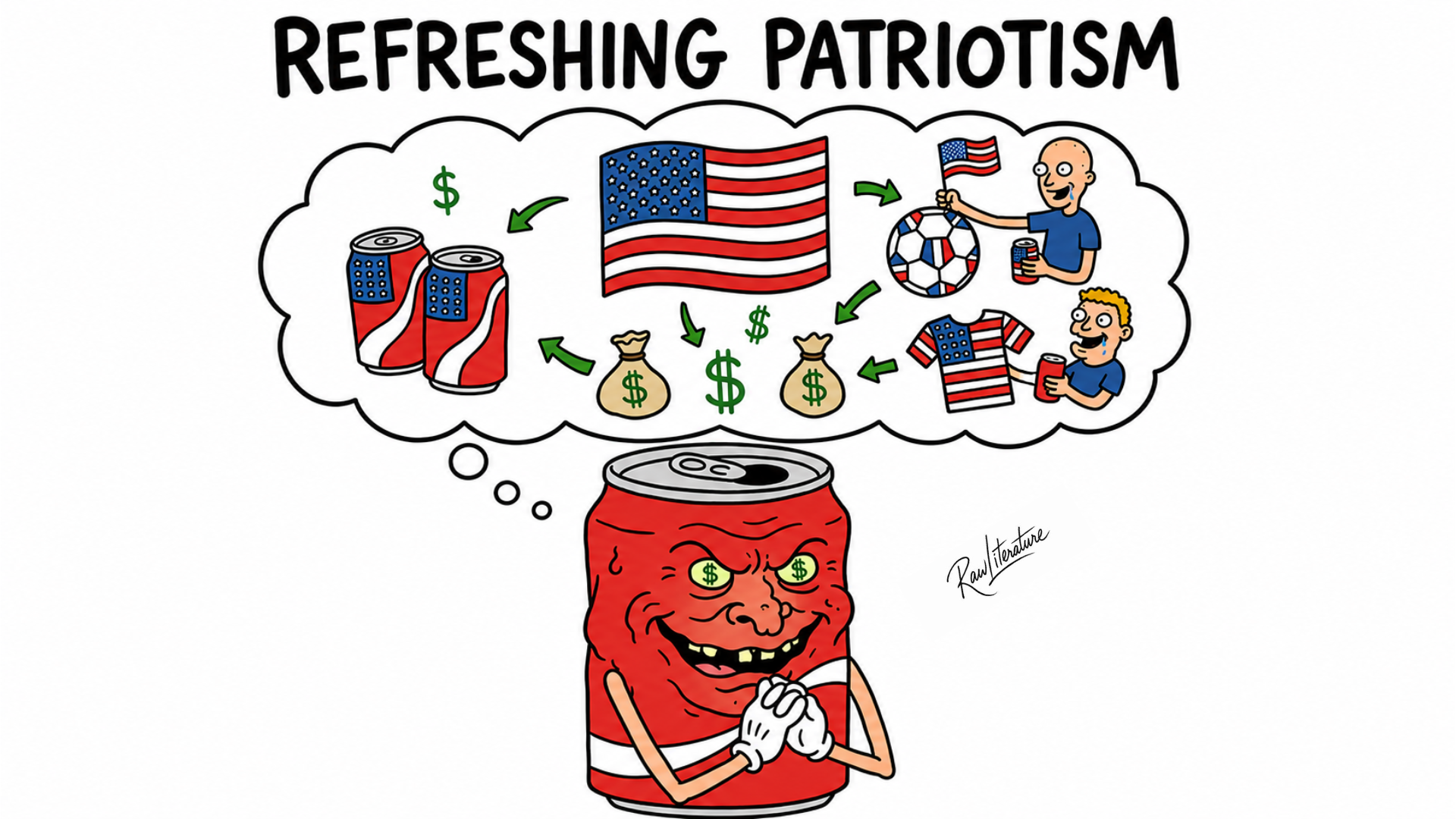
There’re few human inventions capable of generating such a beautiful, staggering profit as those rooted in absolute tribalism. Historically, we’ve relied on religions, rigid ideologies, mass entertainment, and good old-fashioned warfare to keep corporate margins high.
This season, let us celebrate entertainment, as humanity collectively drowns in the synthetic euphoria of the 2026 FIFA World Cup circus. To maximize the financial return from this theater of the absurd, corporate mega-sponsors work tirelessly, engineering sophisticated marketing campaigns explicitly designed to exploit and enhance the volatile power of nationalism.
Let us remember that the expanded tournament now gathers forty-eight nations, colliding in a hyper-commodified ecosystem of symmetrical and asymmetrical cultural identities. Some of these participants exist in permanent geopolitical tension, such as the Islamic Republic of Iran matching up against a primary tournament host, the United States. Others are historic underdogs making their debut on the grandest stage, like the tiny Caribbean island of Curaçao, which entered the record books as the smallest nation by population ever to qualify for a World Cup.
To manipulate this folkloric disease of nationalism, a fever that global citizens joyfully contract every four years as national anthems are roared and flags are aggressively waved, corporate overlords like the Coca-Cola Company have perfected a brilliant psychological trap. Having bought its way into the official FIFA inner sanctum as an official sponsor since 1978, Coca-Cola’s current strategy leans heavily on tribal merchandise: wrapping every poisonous sugary aluminum can in the flag of a participating country. It’s sheer corporate genius. Their marketing slogans promise to “connect people” through the magic of football. In reality, it successfully lubricates a multi-billion-dollar spectacle where fans routinely clash over arbitrary differences in jersey colors, languages, and geopolitical dogmas.
Coca-Cola thoroughly understands the commercial power of historical tradition, so why not hyper-charge that sentiment? Throughout the entire tournament, you’ll rarely hear a corporate voice speaking of shared human solidarity. Instead, the focus remains strictly on borders, artificial, bureaucratic inventions developed over centuries of human fragmentation. The World Cup provides the ultimate photography of our global division, and corporate sponsors are all too eager to profit from the fractures.
Beyond the temporary patriotic high given to fans alongside an ultra-processed, sugary beverage, there’s an immense financial stake that very few consumers bother to calculate. While health coalitions like the international “Kick Big Soda Out” movement aggressively lobby FIFA to terminate corporate beverage deals due to a global public health crisis, the financial mathematics remain overwhelmingly undefeated. Top-tier FIFA Partners pay an estimated $70 million to $100 million annually for these marketing rights, with FIFA’s total marketing rights budget for the 2023–2026 cycle scaling to a record $2.69 billion.
After accounting for every televised commercial, pitch-side digital banner, customized Panini album sticker, and branded pop-up store, corporate entities like Coca-Cola are positioned to capture billions in global consumer revenue. While ordinary fans walk away from the circus with nothing but a fleeting nationalistic hangover and a souvenir plastic cup, the corporate sponsors walk away with an absolute financial masterclass.
For more satirical news, visit Samsara News!